Skanda Dia FoundationSkanda Dia Foundation

Epic · Kachiappa Sivachariyar

Kanda Puranam

The Tamil telling of Lord Skanda’s birth and His war against the asura Surapadman — the story behind Skanda Sashti, and behind the Foundation’s own Mahayatra.

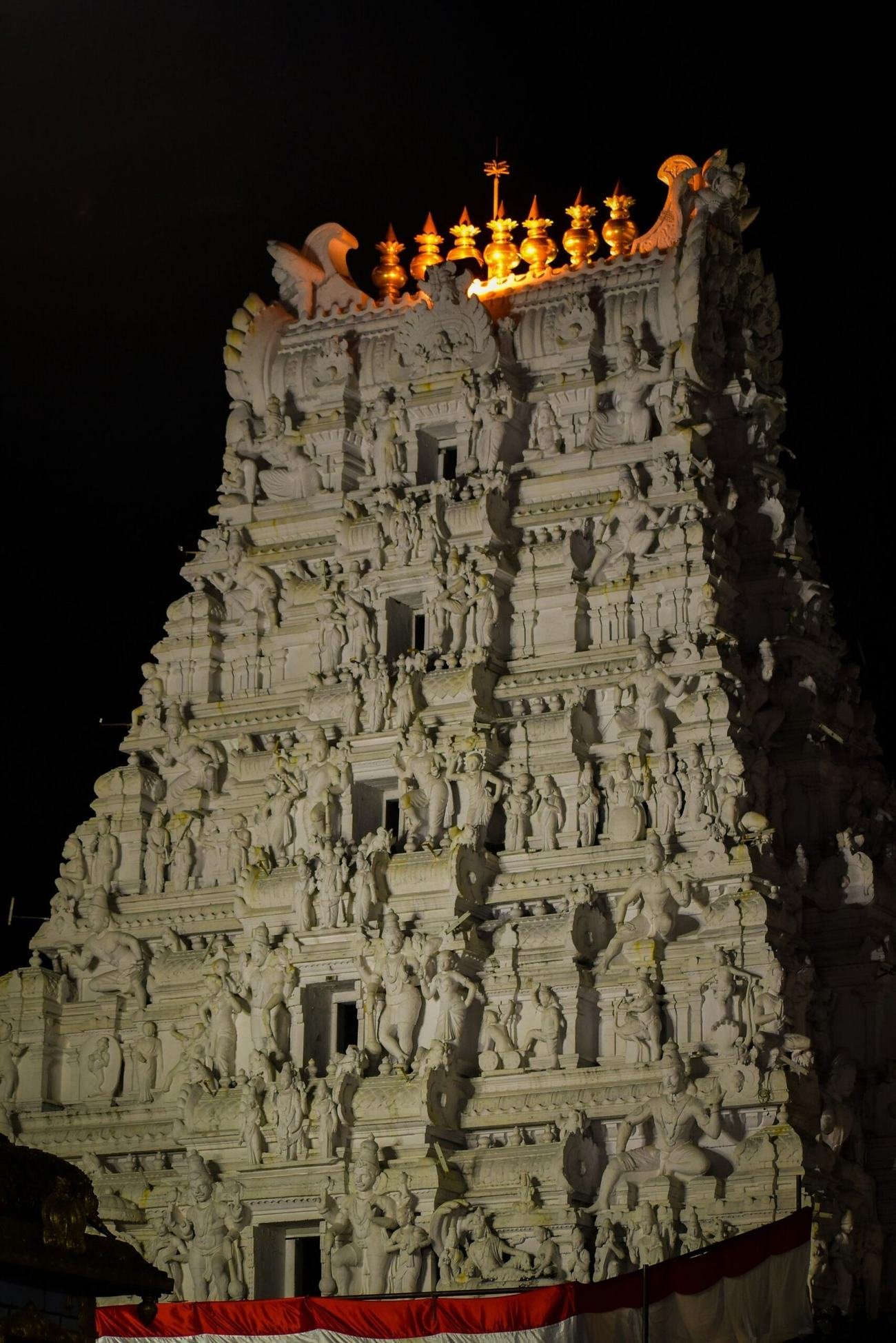
Temple gopuram

கந்தபுரஷனம்

A Tamil epic, six books long

Composed by Kachiappa Sivachariyar in the fifteenth century, the Kanda Puranam is the great Tamil retelling of the Sanskrit Skanda Purana — the scripture of Lord Skanda, better known in Tamil Nadu as Muruga. It runs to six kandams (books), moving from the order of creation itself to the birth of a child strong enough to restore it.

Its center is a single conflict: the asura Surapadman, drunk on a boon of near-invincibility, has made the three worlds ungovernable. Only a son of Shiva, born for exactly this purpose, can end him.
6

Kandams (books)

15th c.

Composed by Kachiappa Sivachariyar

1

War, one restoration

Sashti

The festival that re-enacts it

PART OF A LARGER TRADITION

A Tamil epic, drawn from a much larger well

The Kanda Puranam belongs to the same tradition as the Sanskrit Skanda Purana — one of Hinduism’s eighteen Mahapuranas, and traditionally reckoned the largest of them, spanning several khandas (Maheshwara, Vaishnava, Brahma, Kashi, and others) devoted to Lord Shiva’s glory, the sanctity of pilgrimage sites, and the birth of His son. Kachiappa Sivachariyar’s Tamil work is not a translation of that vast text, but a focused retelling in its own right — the same well of tradition, drawn into a single, self-contained epic centered on Muruga.

THE STORY

Birth, war, and what victory actually looks like

A child born of fire

Six sparks from Shiva’s own fire are raised by the six Krittika mothers, then drawn together into a single child with six faces — Arumugam, ‘the six-faced one.’

Given the Vel

Parvati arms Him with the Vel, a spear said to be wisdom itself — the one weapon capable of piercing the ego Surapadman has hardened himself into.

Soorasamharam

In the epic’s climax, Surapadman is not simply destroyed. Defeated, he offers himself — and is split into a peacock, who becomes Muruga’s vehicle, and a rooster, who becomes His banner.

WHAT IT MEANS

Not the end of the enemy — the transformation of him

Soorasamharam is read, traditionally, as an inner story as much as an outer one: Surapadman’s pride does not simply vanish when it is defeated — it is put to use, standing forever afterward at Muruga’s own side. Skanda Sashti, the six-day festival that re-enacts this war every year, ends not in a funeral but in a wedding: Muruga’s marriage to Deivanai, daughter of Indra.

The Foundation’s own Sri Skanda Sathru Samhaara Mahayatra carries this same story forward each year at Pranavagiri.

Temple gopuram

See the Mahayatra

Each year, the Foundation observes the Sri Skanda Sathru Samhaara Mahayatra — this same story, carried forward as living practice.

READ ON

Continue through the library

Meet Lord Muruga

The deity at the center of this epic — His story, and what His courage is said to mean.

Read More

Read the Hymns

Thiruppugazh, the devotional hymns of Arunagirinathar sung weekly at the Foundation’s satsang.

Explore

Read the Commentary

Thiruppadattirattu, the Foundation’s first complete published edition.

Explore

FOLLOW THE JOURNEY

Stay connected

Excerpts, publication updates, and glimpses of the lineage’s home in the Nilgiris — follow along on Instagram, Facebook, and YouTube.

InstagramFacebookYouTube